
Stratamed vs. triple antibiotic ointment
Randomised, single-blinded, open-label study
Explore the studyExplore the studies and clinical experience behind Stratamed.
Discover the study setting, treatment comparison and reported outcomes. The studies below include randomised comparisons and a small case series; each offers a different level of evidence.
Randomised, single-blinded, open-label study
Explore the studyRandomised, single-blinded, split-scalp trial
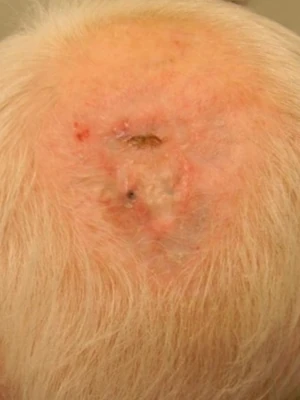
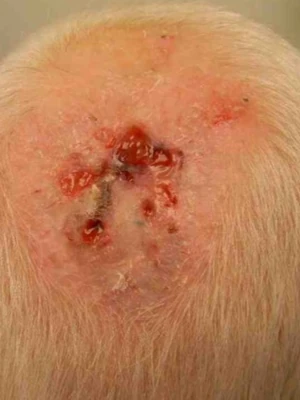
Explore the studyElderly patients after scalp carcinoma surgery
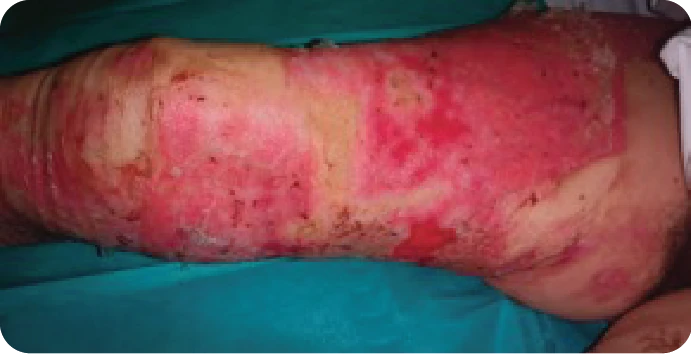
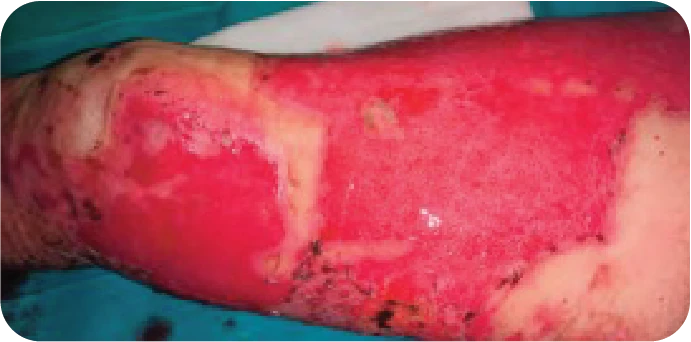
Explore the studyComparison of clinically similar burn areas
Explore the studyA 231-patient open-label, randomised, single-blinded study was conducted in the USA to compare Stratamed and a topical triple antibiotic ointment (Bacitracin Zinc, Neomycin Sulfate, and Polymyxin B Sulfate, Neosporin® Original) for the infection rate, prevalence of contact dermatitis and healing quality.
Stratamed® demonstrated a significant efficacy in preventing contact dermatitis, with a 0% occurrence rate, while the triple Antibiotics (TA) group experienced a 21.6% rate.


A 19-patient randomised, single-blinded, split-scalp trial was conducted in the USA to compare Stratamed and topical antibiotic (Bacitracin Zinc, Bacitracin®) assessing the edema, erythema, crusting, healing response and outcome preference following FUE (Follicular Unit Extraction) hair transplantation.
Stratamed is as effective as topical antibiotics in reducing the inflammation (edema, erythema and crusting).

This study showcases the efficacy of Stratamed in treating non-healing scalp wounds, through an in-depth examination of four case studies involving elderly patients who underwent surgical procedures for scalp carcinomas. Despite initial treatments, including topical ointments and electrodesiccation with curettage, the wounds remained nonhealing.
Slide to compare
Study with 12 patients with mid-deep and deep burn wounds, all of which applied Stratamed® and standard of care (e.g., silver dressings, collagenases, alginates) on two clinically similar wound areas.
Mean days from commencing treatment to 95% re-epithelialization were:
Slide to compare
The following studies have been published in international journals confirming the unique and novel nature of Stratamed.

James, IB, et al. (2022). Aesthetic Surgery Journal Open Forum, 4, pp. 1-8.
Click here to read the publication
Lucattelli, E., et al. (2021). Annals of Burns and Fire Disasters, 34(1), pp. 53-57.
Click here to read the publication
Benedetto, AV, et al. (2021). J Eur Acad Dermatol Venereol, 35(1) pp. 247-255.
Click here to read the publication
Cubiró, RX, et al. (2019). ‘Efficacy of an Innovative Film-Forming Wound Dressing on Open Wounds’, SKINmed, 17(5), pp. 298-304.
Click here to read the publication
Marini, L. (2017). J of the European Academy of Dermatology and Venereology, 32(1), pp. 113-116.
Click to read the publication
Uva, L. et al. (2016).‘Erosive pustular dermatosis successfully treated with a novel silicone gel’, International Journal of Dermatology, 55(1), pp. 89-91.
Click here to read the publication
Monk, EC, et al. (2014). ‘Successful Treatment of Nonhealing Scalp Wounds Using a Silicone Gel’, Dermatologic Surgery, 40(1), pp. 76-79
Click here to read the publication
Sandhofer, M., Schauer, P. (2012). ‘The Safety, Efficacy, and Tolerability of a Novel Silicone Gel Dressing Following Dermatological Surgery’, SKINmed, 10(6), S1-S7.
Click here to read the publicationDownload the Stratamed whitepapers for a closer look at the study methods and outcomes.


Clinical guideline for Stratamed use in neonatal care: Stratamed – Neonatal Clinical Guideline
Stratpharma is participating and sponsoring clinical trials in many places globally.
Trial objective: To evaluate the mode of action of Stratamed on the healing of microscopic treatment zones (MTZs)
Location: Switzerland
Status: Ongoing and still enrolling
More information: Contact us

Contact the Stratpharma medical team for questions about the studies and clinical experience with Stratamed.
Contact our medical team